
Pokémon GO Ditto Disguises & Catch Complete Guide

Pokémon GO Ditto Disguises & Catch Guide Explained
Every seasoned trainer knows the frustration: you snap a Poké Ball at what looks like a common Pidgey, only to watch the screen flash with the iconic “Oh?” transformation animation. This Pokémon GO Ditto Disguises & Catch Guide exists to eliminate that guesswork entirely, giving you the exact species pool, catch mechanics, and location data needed to farm Ditto efficiently in the current Pokémon GO meta. Ditto remains one of the most valuable Pokémon in the game for both PvP flex-slot building and raid-attacker experimentation, since it copies the moveset and stats of whatever it transforms into during battle.
Unlike Legendary or Mythical Pokémon, Ditto doesn’t appear in the wild with its true form visible. Instead, Niantic disguises it as a rotating list of common species, meaning you’re technically catching a “fake” Pokémon until the transformation reveals the truth post-capture. This mechanic, unchanged since Ditto’s 2018 debut, forces trainers to catch duplicates of every disguised species indiscriminately, which can burn through Poké Balls and Berries fast if you’re not strategic about it.
Understanding the current disguise rotation, optimal catch techniques, and time-sensitive spawn windows transforms Ditto hunting from a random grind into a calculated farming session. Below, we break down exactly which Pokémon are currently masking Ditto, how to maximize your catch rate, and where the spawn density makes farming worthwhile.
Current Ditto Disguises: Which Pokémon Can Be Ditto
Niantic rotates the Ditto disguise pool periodically, often syncing changes with seasonal events, Community Days, or quarterly meta shifts. As of the current rotation, the following species have a chance of being a disguised Ditto whenever encountered in the wild:
- Foongus – Grass/Poison type, common in Johto-themed spawns
- Gulpin – Poison type, frequent in urban and event spawns
- Stunky – Poison/Dark type, common during nighttime hours
- Numel – Fire/Ground type, boosted during volcanic or hoenn events
- Snubbull – Fairy type, appears heavily during Valentine’s-adjacent events
- Finneon – Water type, common near water biomes
It’s critical to understand that not every instance of these species is Ditto — only a small percentage of each spawn actually transforms. Historically, catch rates for a hidden Ditto within a disguise pool hover between 1% and 5% of total encounters, meaning you may need to catch dozens of Foongus or Gulpin before triggering the reveal animation. Niantic does not publish exact odds, but community data-mining consistently confirms this low-probability distribution across every rotation since 2018.
The disguise list changes roughly every one to three months, so trainers should always cross-check in-game Event pages or reliable tracking communities before dedicating a session to a specific species. Species selection also correlates with regional spawn biomes — Finneon dominates coastal cities, while Numel spikes during desert-biome-themed spawns. If your goal is filling out a competitive roster for Great League or Ultra League using a well-rolled Ditto, pairing your hunt with a Pokémon GO Stardust Service ensures you have the resources to power up your catch immediately once you land a high-IV transformation.
How to Catch Ditto: Step-by-Step Transformation Tips
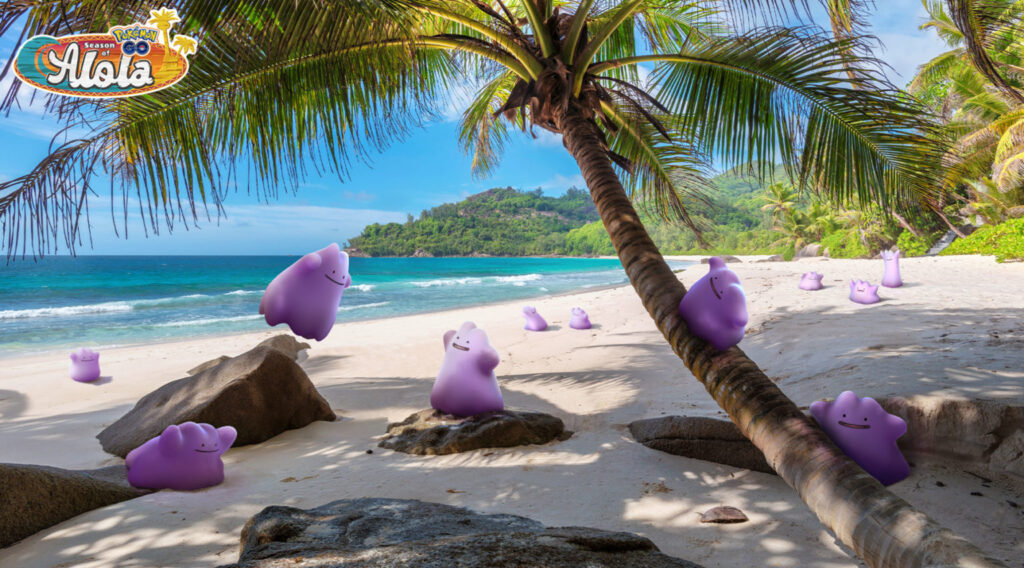
Catching a disguised Ditto follows the exact same mechanical process as catching any standard wild Pokémon — there is no special ball, Berry, or throw technique that increases your odds of revealing one. The transformation is determined server-side the moment the encounter loads, meaning the Pokémon is either “secretly” a Ditto or it isn’t, regardless of how you throw your Ball. This is a critical myth to dispel: no Curveball, Excellent Throw, or Golden Razz Berry combination affects Ditto reveal probability.
That said, efficient catching mechanics still matter enormously for volume farming, since you’ll need to process dozens of encounters quickly to statistically land a Ditto. Follow these steps to maximize your hourly catch throughput:
- Use Pinap Berries sparingly — save Candy-boosting items for confirmed non-Ditto catches to avoid waste
- Throw standard Curveballs for the bonus XP without risking missed throws on Excellent-only attempts
- Enable “Fast Catch” settings in-game to skip unnecessary animations between encounters
- Prioritize Great Ball or better on disguise species with lower base catch rates, like Stunky
- Stack an Incense or Lure to increase overall spawn density near your position
Once the transformation triggers, you’ll see the signature “Oh?” burst animation followed by Ditto’s true sprite replacing the disguise. At this point, the Pokémon’s CP, IVs, and moveset are freshly generated as Ditto’s base stats, independent of whatever the disguise’s stats appeared to be. Trainers grinding for a perfect 100% IV Ditto for competitive PvP builds should treat this like any high-value IV hunt — if the RNG isn’t cooperating, the Pokémon GO Raid Service team can help secure other high-value Shundo targets while you continue farming disguises organically.
Best Locations and Times to Find Ditto Disguises
Spawn density for Ditto disguise species varies significantly based on biome, urban density, and time of day, making location strategy just as important as catch mechanics. Urban areas with mixed biome types — parks adjacent to water features, for example — tend to spawn a wider variety of the current disguise pool simultaneously, increasing your total encounter volume per hour compared to rural single-biome zones.
Time-of-day rotations matter significantly for species like Stunky, which spawns far more frequently between 6 PM and 6 AM local time due to its nocturnal spawn table classification. Conversely, Numel and Foongus tend to spike during daytime hours in grassy or volcanic biome overlays. Weather boosts also play a factor: rainy weather increases Water-type spawns like Finneon, while windy conditions can boost Poison-type frequency for Gulpin and Stunky simultaneously, effectively doubling your disguise-pool encounter rate during the right atmospheric window.
Community Day events and seasonal celebrations frequently feature one of the current disguise species as the featured spawn, creating an artificial spawn flood that dramatically increases your total Ditto encounters within a three-hour window. These events are statistically the single best time to farm Ditto, since spawn rates for the featured species can increase by 300–400% citywide. Stocking up on Poké Balls and Berries beforehand through a cheap coin purchase via Buy PokéCoins Cheap ensures you won’t run dry mid-event when the spawns are flooding your screen.
FAQ: Ditto Disguises & Catch Guide Common Questions
Can Shiny Ditto be caught through disguises?
Yes. When a disguise species has an active Shiny release, catching a Shiny version of that disguise can reveal a Shiny Ditto, but only during specific event windows where Shiny Ditto is enabled.
Does using a Lucky Egg increase Ditto reveal odds?
No. Lucky Eggs only double XP earned from catches and have zero impact on the probability of a disguise transforming into Ditto.
How many catches does it typically take to find one Ditto?
Community data suggests anywhere from 20 to 100 catches of disguise species, depending on current event boosts and regional spawn rates.
Do Raid Bosses ever disguise as Ditto?
No. Ditto only appears through wild spawn disguises; it has never been featured as a raid boss encounter in Pokémon GO’s current mechanics.
Is Ditto viable in Great League or Ultra League?
Yes, though situational. Ditto’s transformation copies opponent stats mid-battle, making it a niche flex-pick rather than a top-tier meta staple.
Ready to skip the grind entirely? Explore full-service account boosts, rapid leveling, guaranteed Shiny hunts, and more at BoostMyPoke.com — your trusted partner for dominating the Pokémon GO meta.